13 Professional Florist Illustration Review
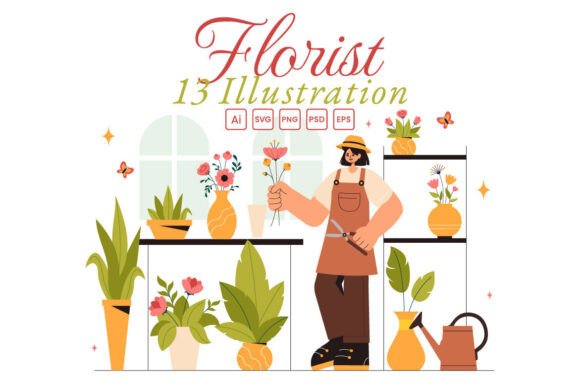
As a designer who has spent years turning digital assets into tangible, stitched reality, I approach every new download with a mix of excitement and skepticism. The market is flooded with Graphics that look perfect on a screen but fall apart under the needle. Recently, I examined the 13 Professional Florist Illustration, a piece described as a professional florist working vector illustration featuring a flower store creating beautiful gift bouquets in a flat style. Before I commit this to my machine for a client project or a batch of handmade products, I need to know: does it translate well from a web banner concept to a physical embroidery file?
The first impression of 13 Professional Florist Illustration is one of clean, modern utility. Unlike the overly intricate, hand-drawn botanical sketches that often clog up small hoops, this design embraces a flat style. It feels crisp and graphic, which immediately signals to me that it is built for clarity rather than artistic ambiguity. For an embroidery designer, this is crucial. Flat styles tend to hold their shape better during digitization because they rely on bold outlines and distinct shapes rather than delicate gradients that can get lost in thread texture.
I visualized this design being used for a specific real-world scenario: a custom embroidered tote bag for a local boutique owner. Imagine a canvas tote, sturdy and neutral, featuring the florist character holding a vibrant bouquet. The flat style of 13 Professional Florist Illustration would pop against the fabric without looking muddy. It conveys a sense of professionalism and trade, making it perfect for branding merchandise. However, the transition from a "Poster" or "Web Banner" intended use to a "Tote Bag Design" requires careful consideration of stitch density and detail level.
When evaluating how 13 Professional Florist Illustration performs in actual stitching situations, the layout is its strongest asset. The composition features a central figure surrounded by floral elements, which naturally guides the eye. In a commercial embroidery context, such as creating branded aprons or kitchen towels for a flower shop, this design works exceptionally well. The flat style allows for generous use of satin stitches for the outlines and fill stitches for the clothing and flowers, ensuring the image remains legible even after washing. For an Etsy seller looking to expand their inventory with personalized gifts, this design offers a versatile template that fits the current trend of artisanal, craft-focused aesthetics.
However, not every application is suitable. If you are planning to use this as an embroidered patch for a cap, you must be mindful of the curvature. While the flat style is generally forgiving, the detailed corners of the florist's tools or the fine lines of the bouquet stems might struggle on a highly curved surface like a baseball cap. Small hoop sizes present another challenge. If your machine setup limits you to a 4x4 inch area, the resolution of 13 Professional Florist Illustration might become compromised. Tiny details in the background or the textural elements of the flowers could merge together, resulting in a loss of definition. In these cases, the design might need to be resized significantly, which could strip away the charm that makes it unique.
The choice of fabric also plays a pivotal role in the success of this project. 13 Professional Florist Illustration relies on contrast to maintain its visual appeal. On dark fabrics, the design will require a high-quality underlay and potentially a cover-up stitch technique to prevent the base color from bleeding through. Conversely, on thin or stretchy fabrics like jersey or light cotton blends, the tension required for the fill stitches might cause puckering. This is where proper stabilizer selection becomes non-negotiable. A tear-away or cut-away stabilizer appropriate for the weight of the fabric will ensure that the final product retains its structure and doesn't distort over time.
From a customer perspective, the visual appeal of 13 Professional Florist Illustration directly impacts perceived value. When a buyer sees a neatly stitched, clear image of a florist on a sweatshirt or a baby onesie, they associate that quality with the brand behind the product. There is a trust factor at play here; a sloppy stitch job or a design that looks pixelated when stitched undermines the credibility of a handmade business. This illustration, with its clean lines and professional theme, elevates the finished product. It suggests that the maker cares about details, whether it is a holiday gift for a grandmother or a boutique product for a retail shelf.
For those considering using this as a digital embroidery file for resale, the versatility is undeniable. The flat style translates well into printable mockups, allowing designers to showcase the design on various items before committing to production. Whether you are selling a custom apparel line or offering personalized gifts for weddings, the imagery of a florist creates an emotional connection. It evokes feelings of care, beauty, and nature, which are universally appealing themes. However, before listing this as a commercial asset, you must confirm the licensing terms. Just because a design is labeled as a vector illustration for posters does not automatically grant you the right to sell finished embroidered goods.
Practical advice for the experienced embroiderer: always test the design on scrap fabric first. This step is often skipped by hobbyists rushing to meet deadlines, but it is essential for maintaining consistency across a batch of products. Check the thread colors to ensure they offer enough contrast against your chosen fabric. Review the stitch density in your digitizing software; if the design is too dense, it may feel stiff and uncomfortable on wearable items like t-shirts or baby clothes. Inspect the small details closely, particularly the stems and leaves, to see if they require simplification for smaller hoop sizes.
Comparing the design in black and white mockups can also reveal hidden issues with spacing and balance. Sometimes, color hides poor composition, but removing it exposes the structural weaknesses. Additionally, consider the end-use of the item. If the product is meant for frequent washing, such as a tea towel or a work apron, the durability of the stitches is paramount. Ensure that the 13 Professional Florist Illustration is digitized with sufficient coverage to withstand abrasion. For decorative accents on pillow covers or blankets, the design can be slightly more delicate, but the overall aesthetic should remain cohesive with the surrounding decor.
In conclusion, 13 Professional Florist Illustration stands out as a practical and visually engaging option for embroidery projects that demand a blend of professionalism and charm. Its flat style makes it adaptable to a wide range of applications, from embroidered patches to large-scale banners. However, success depends on the designer's ability to adapt the file to the physical constraints of the fabric and the machine. By testing thoroughly, selecting the right materials, and understanding the limitations of the design, you can transform this digital asset into a stunning finished product that delights customers and strengthens your brand. Whether you are a seasoned Etsy seller or a creative entrepreneur launching a new line, this illustration offers a solid foundation for building a memorable, handmade collection.